7 Tips for Dressing Your Best On Camera for a Business Video Shoot
Last updated: March 26, 2026

An outfit can look perfectly fine in person and still become a problem on camera. What feels polished in the mirror can turn distracting once lighting, framing, movement, and audio setup come into play.
That is usually where the trouble starts. Fine patterns can shimmer, bright whites can dominate the frame, jewellery can create noise, and some fabrics or layered outfits can make microphone placement harder than it needs to be. In most business video, clothing works best when it supports the speaker rather than competing for attention. That broader question of what makes business video feel credible often comes down to small choices like these.
Wardrobe is only one small part of making business video connect without unnecessary friction. This page focuses on the narrower production question of what to wear so your clothing helps the shoot instead of creating avoidable problems.
| What to plan for | Weak approach | Stronger approach |
|---|---|---|
| Colour choice | Picking bright white, deep black, or very vivid colours without thinking about lighting or background | Choosing solid mid-tones or muted colours that separate well from the background and keep attention on the speaker |
| Patterns and fabric | Wearing fine stripes, tight checks, shiny finishes, or layered fabrics that look good in person but react badly on camera or under a microphone | Using plain fabrics or subtle textures that stay visually calm and do not create shimmer, glare, or unnecessary fabric noise |
| Accessories and logos | Leaving in prominent branding, necklaces, or bracelets that pull focus or create sound once filming starts | Keeping logos minimal and choosing simple accessories that do not distract visually or interfere with clean audio |
| Fit and audio setup | Choosing an outfit without thinking about where a lav mic, cable, or pack will go | Wearing clothing that is comfortable, practical for the filming setup, and gives the crew clean microphone options |
| Final check | Arriving with one outfit and no last-minute check for lint, creases, or background clash | Bringing a backup option and doing a quick once-over for lint, wrinkles, contrast, and small distractions before filming starts |
1. Dress for the role and the shoot setting
Before choosing what to wear, think about the type of video being filmed. A founder interview, testimonial, internal update, and recruitment video do not all need the same wardrobe.
The aim is not to look overly styled. It is to look appropriate for the setting, the role, and the tone of the message without becoming a distraction.
2. Choose colours the camera can handle
Solid colours are usually the safest option on camera. Mid-tones and muted shades often work well because they keep attention on the speaker and tend to sit better against different backgrounds.
Bright white can dominate the frame. Deep black can lose detail. If a colour already looks harsh or washed out on a quick phone test, it is probably not the best first choice.
3. Avoid patterns, shiny fabrics, and noisy layers
Fine stripes, tight checks, and small repeating patterns can shimmer on camera. Shiny or reflective fabrics can also catch light in distracting ways.
There can be an audio issue too. If fabrics rub together under a lav mic, they can create unwanted noise. That is why plain fabrics and subtle textures are usually the safer choice.

Examples of patterns that can become distracting on camera.
4. Keep logos, jewellery, and accessories under control
Large logos can clutter the frame and pull attention away from the speaker. Jewellery can do the same, and some items can also create unwanted sound once a microphone is live.
Simple accessories are usually fine. If something is visually dominant or likely to move or knock against clothing, it is worth removing.
5. Think about fit, comfort, and microphone placement
Clothing needs to work for filming, not just for appearance. If it is too stiff, awkward, or uncomfortable, that often shows up in posture and delivery.
It also helps to think about the audio setup in advance. Jackets, structured tops, and buttoned shirts often make lav mic placement easier. Softer fabrics, dresses, or loose necklines may need more thought depending on the setup.
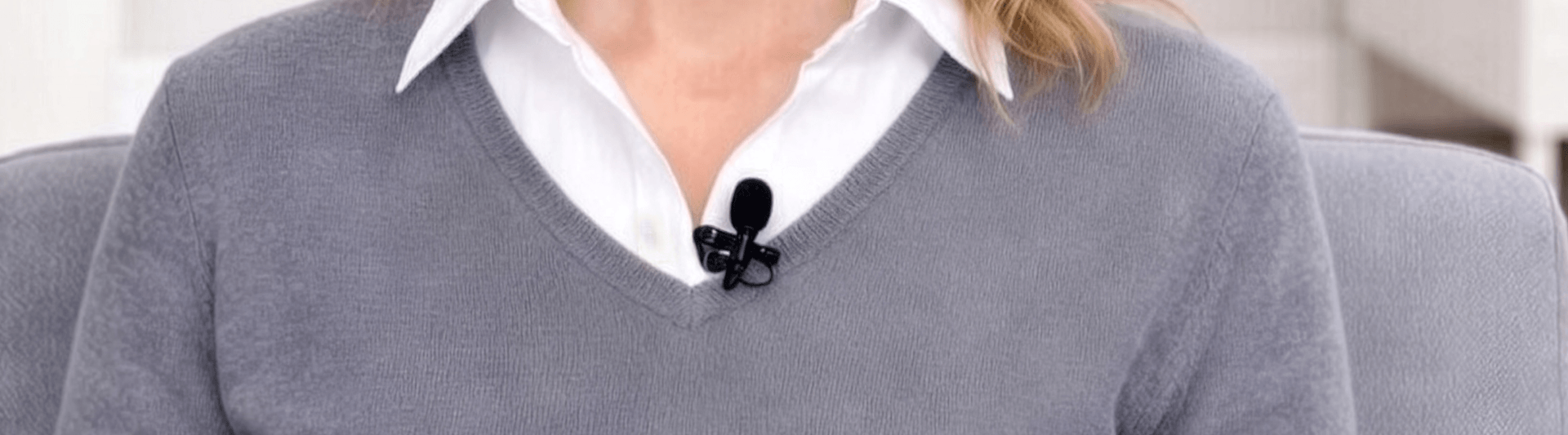
Some layered outfits can make lav mic placement harder. If a sweater shifts over the shirt underneath, fabric movement can create noise, so it helps to check in advance how audio will be captured.
6. Check the background and filming setup before the shoot
Clothing always appears against a setting, so contrast matters. If the background is light and the subject is wearing white, they may blend in more than expected.
A stronger solid colour can help the person stand out. It is worth checking where the filming will happen and asking the crew if one option is likely to work better than another.
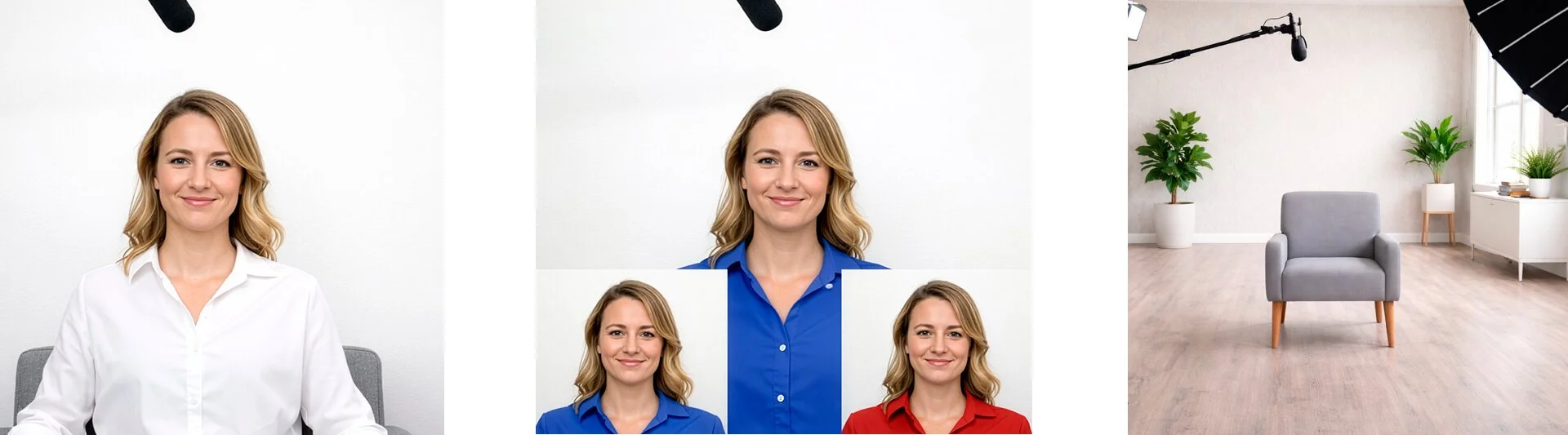
Clothing colour can change how clearly the subject stands out. On lighter backgrounds, stronger solid colours often create better separation than white.
7. Bring a backup option and do a final once-over
One outfit can work. Two is safer. A backup gives the crew flexibility if the first choice clashes with the background or causes issues with the microphone setup.
Before filming starts, do a quick check for lint, hair, creases, twisted collars, or anything else that could become distracting on camera. Small details are often what get noticed most.
A quick checklist before you step on camera
Before filming starts, check:
does the outfit fit the setting and the role?
is the colour likely to work with the background?
is the fabric visually calm rather than busy?
are logos and accessories minimal?
could any jewellery or layers create sound under a microphone?
will the outfit work with the planned audio setup?
is it comfortable enough for the full shoot?
have you checked for lint, hair, wrinkles, or other small distractions?
have you brought a second option?
When clothing works, nobody talks about it. The viewer pays attention to the speaker, the message, and what the video is there to do. For most business video, that is exactly the result you want.